
The Philippines’ Meetings, Incentives, Conferences, and Exhibitions (MICE) sector is emerging as a key driver of inclusive economic growth, with venues, organizers, and government agencies aligning more closely with national development priorities. From export-focused trade shows to cross-sector forums, business events are becoming platforms for investment, innovation, and regional cooperation.
“Today’s MICE events must deliver more than foot traffic. They must generate quality outcomes,” said Pamela D. Pascual, Chairman and CEO of World Trade Center Metro Manila (WTCMM) and Board Member of World Trade Centers Association (WTCA), a network of more than 300 highly connected and mutually supporting businesses and organizations in nearly 100 countries and territories.
“We see events as platforms that foster strategic partnerships, drive sectoral growth, and connect SMEs to global value chains,” explained Pascual, who also sits on the Board of Directors of the Union des Foires Internationales (UFI), the global association of the exhibition industry.
Tourism planners and industry players are investing in infrastructure and policy improvements to unlock growth across MICE segments. According to the Philippine Tourism Promotions Board (TPB), the country is scaling up group travel incentives, enhancing transport links, and expanding event capacity in Metro Manila, Cebu, Davao, Clark, and, Iloilo.
During the Philippine Travel Exchange (PHITEX) and MICECONnect 2025 – the government’s flagship travel trade and MICE platforms – TPB Chief Operating Officer Maria Margarita Montemayor Nograles reaffirmed her agency’s commitment to collaboration, sustainability, and inclusivity. She emphasized that tourism growth must uplift communities nationwide and contribute to the country’s economic and cultural strength.
Momentum across the wider Asia-Pacific region reinforces these trends. According to the UFI, Asia-Pacific’s trade fair industry is projected to surpass pre-pandemic levels by 2026, driven by increased venue capacity and expanding event activity.
Grand View Research estimates a 10% compound annual growth rate for the Asia-Pacific MICE market from 2025 to 2030. Meanwhile, Market Research Future projects the global MICE market to reach about US $1.7276 trillion by 2032, with a compound annual growth rate of 7.9%.
These dynamics are shaping the local landscape in tangible ways. One example is the recently concluded Event Experience Expo (E3) 2025, held last September at WTCMM and organized by WTC Management, Inc. (WTCMI) in partnership with private sector players.
The first of its kind in the country, E3 2025 reflected a growing shift toward purpose-driven and value-based programming — an approach highlighted at the 2024 Asian MICE Forum (AMF), where global leaders emphasized the importance of inclusive formats, destination storytelling, and lasting partnerships.
With expert-led learning sessions and strong networking opportunities, E3 generated an estimated ₱25 million in business, setting a new standard for the Philippine events industry.
One of the solutions showcased at E3 2025 was Snapside, part of the Sparks AI suite introduced by GEVME. Presented by Jonathan Easton, Vice President of Product Design, the platform allows attendees to scan QR codes for real-time session summaries, giving organizers a way to extend content reach, personalize engagement, and gather actionable insights.
“When attendees feel seen and supported, they stay longer, engage deeper, and come back,” Easton noted. “That’s not just good UX — it’s good business.”
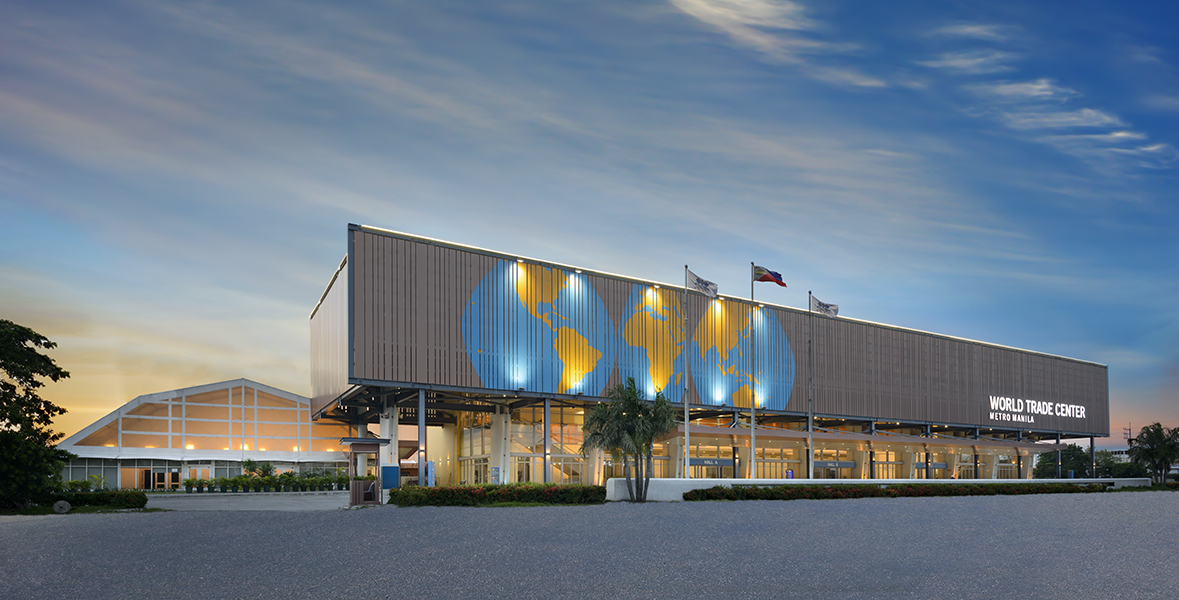
Venues are also upgrading to meet evolving expectations around sustainability, cost-efficiency, and service. At WTCMM, enhancements include energy-efficient lighting, air purification systems, and measures aligned with global standards. These efforts echo broader industry trends such as digitizing materials, using recycled booth components, and optimizing logistics to reduce carbon emissions.
Since opening in 1996, WTCMM has hosted milestone events such as APEC and ASEAN Summits, SEA Games competitions, and the National Women’s Summit, where former U.S. First Lady Hillary Clinton served as keynote speaker. It also proudly hosted the WTCA’s 46th General Assembly in 2015.
It continues to set benchmarks for the industry, regularly staging flagship trade shows like Manila FAME, IFEX, PROPAK, WorldBex, and ADAS, covering sectors from food and safety to automotive and construction.
The venue has been recognized with the ASEAN MICE Venue Award (2022–2025), ISO 9001 management certification, and WTCA Premier Accreditation, with specializations in Business & Member Services, Trade Development, and Conference & Exhibition Services – distinctions that underscore how Philippine venues are raising standards to compete globally.
Government-led infrastructure improvements – such as expanded air routes, better inter-island links, and upgraded digital networks – are also easing logistics for both local and international delegates.
“These public and private sector investments play a vital role in enabling venues like WTCMM to deliver seamless mobility and world-class service to clients and delegates,” Pascual said. “They also strengthen the Philippines’ positioning as a competitive and accessible MICE destination.”
These developments signal a broader shift. The Philippine MICE sector is evolving beyond logistics to focus on long-term relevance, strategic alignment, and inclusive growth. Globally, organizers are blending technology, sustainability, and experiential design to elevate impact — trends that Philippine stakeholders are increasingly reflecting in their own formats and offerings.
“With continued collaboration across the public and private sectors, the MICE industry is increasingly recognized as a strategic driver of national competitiveness,” Pascual added.